









Every store owner who finds a winning Facebook ad asks the same question a week later: how do we spend more on this without wrecking it? Double the budget on Monday and by Friday the cost per purchase has often doubled too. Scaling Meta ads is not one button. It is a set of moves, each with its own risk, and the skill is choosing the right move for where your account is. This guide covers how we decide when an ad is ready to scale, the methods we use, the warning signs that scaling has stopped working, and the parts of the business that have to scale with the ads.
Is it actually ready to scale?
Most scaling failures start before the budget changes. The "winner" was never a winner: it had a lucky week, a handful of purchases, or a ROAS that only existed in Ads Manager. Before we raise spend, an ad or ad set has to pass four checks:
- Enough data. At least seven days live and a meaningful number of purchases, not three. With very few conversions, one extra order swings the cost per purchase by 30%.
- Above break-even, with room to spare. If an ad sits right on your break-even ROAS at today's spend, it will usually fall below it at higher spend. We want a buffer first. If you have not calculated that line yet, our break-even ROAS guide walks through it with real costs.
- Confirmed by the store. Meta purchases roughly match the orders in Shopify or WooCommerce for the same week. If they do not, fix tracking before you put more money behind numbers you cannot trust.
- Stable, not spiking. Results held across the week rather than coming from one great day.
If any of these fail, the right move is more testing, not more budget.
Vertical and horizontal scaling
There are two basic ways to spend more, and most healthy accounts use both.
| Method | What you do | Main risk | Best when |
|---|---|---|---|
| Vertical | Raise the budget on the ad set or campaign that is working | Cost per purchase rises as Meta reaches less interested people | The audience is large and the ad still has a low frequency |
| Horizontal | Take proven ads into new audiences, new placements, new countries or a new campaign | New audiences start with no history and may cost more at first | The original audience is getting saturated or is small |
Vertical scaling is simpler and keeps the data the campaign has already collected. Horizontal scaling opens new pockets of buyers but needs its own test period.
How we raise budgets without resetting everything
Meta's delivery system goes through a learning phase when an ad set is new or has been significantly edited. Meta's own guidance has long said an ad set needs roughly 50 optimization events in about a week to exit it, though the exact rules and labels change. During learning, results are less stable. Large budget changes can be treated as a significant edit and push the ad set back into learning.
So our default rules for vertical scaling are deliberately boring:
- Raise by about 20% at a time. Not 100%. Smaller steps let the system adjust without starting over.
- Wait several days between increases. Give each step enough time and enough purchases to read. On low-volume accounts that may mean a week.
- Only raise when cost per purchase held at the last level. If the last increase pushed costs up beyond your target, hold or step back before raising again.
- Change one thing at a time. Budget up and new creative added on the same day means you cannot tell which caused the result.
Twenty percent sounds slow, but it compounds. Raising a $100 daily budget by 20% every four days gets you past $200 within about two weeks, and every step was checked against real orders. Compare that with jumping straight to $300 and spending a week recovering.
When a business has a sudden reason to spend more, for example a holiday sale, we often leave the existing campaign alone and launch the extra budget in a separate campaign with the proven ads. If that new campaign struggles, the original one keeps running.
Horizontal scaling: where to find new buyers
When the first audience starts to saturate, frequency climbs and costs creep up even at the same budget. That is the signal to go sideways. Options, roughly in the order we try them:
- Broader targeting. Many small accounts start narrow with interests. Proven creative often does well with broad targeting, where the ad itself does the filtering. Run it as a test against the current setup rather than switching overnight.
- New angles of the winning product. A different reason to buy reaches a different buyer. The same protein bar sold on taste, on macros and on convenience attracts three overlapping but different crowds.
- New geography. For Canadian stores, the US is the obvious next market; for US stores, Canada is often cheaper per impression but smaller. Shipping costs, delivery times and currency change the break-even ROAS, so recalculate it per country. Our work on ZoRaw Chocolates' first US campaigns started from a separate launch budget rather than stretching the Canadian setup.
- Lookalikes of real buyers. Built from your customer list or purchase events, not from page likes or website visitors. How much they add on top of broad targeting varies by account, so test rather than assume.
Found a winning ad and not sure how far to push it? Book 30 minutes with Nick. You leave with a concrete 7-day ad test, whether you hire us or not.
Book a free call →Creative is the real scaling lever
Budget is the part everyone watches. Creative is what actually limits how far an account can grow. More spend means more impressions, which means people see the same ads more often and they wear out faster. An account spending $300 a day needs new ads much more often than one spending $50.
The way we plan for it:
- Keep a fixed testing budget, often around 10–20% of spend, running every week, so new ads are proving themselves before the current winner fades.
- Build new ads from the angle that won, in new formats: a creator video, a short demo, a customer review read aloud, a comparison.
- Add at least one completely new angle per round, so you are not betting the whole account on one message.
When costs rise on a scaled ad, check whether it is fatigue before blaming the budget increase. We cover the signals and the checks to run in creative fatigue: when to refresh your Meta ads.
Campaign budget, bid strategies and structure
As an account grows, structure starts to matter more. A few principles we rely on, with the caveat that Meta renames and reshuffles these features often:
- Campaign-level budget (Meta now calls it Advantage campaign budget) lets Meta move money between ad sets toward whichever is performing. It suits scaling once you have several proven ad sets. It is less useful when you need to force spend onto a new test.
- Fewer, bigger ad sets usually scale better than many tiny ones competing for the same people. Each ad set needs its own conversions to learn.
- Cost or ROAS controls (bid strategies that set a target cost per result or a minimum ROAS) can protect efficiency at higher spend. The trade-off is that the campaign may not spend the full budget if it cannot find purchases at that price. We test them once a campaign has stable history, not on day one.
- Separate prospecting from retargeting so you can see what new-customer acquisition really costs. Retargeting ROAS always looks great and hides weak prospecting.
Signs scaling has stopped working
Every audience and offer has a point where more spend brings less return. You want to notice it early. We watch these numbers week over week:
| Signal | What it usually means | What we do |
|---|---|---|
| Cost per purchase rising after each budget step | Diminishing returns in the current audience | Hold budget, go horizontal, add creative |
| Frequency rising on prospecting | Audience saturating | Broaden targeting or new angles |
| Meta ROAS steady but store revenue flat | Attribution overlap or retargeting taking credit | Check blended numbers (below) |
| Ad sets stuck in learning | Too many ad sets or edits for the volume | Consolidate, edit less often |
| Spend not delivering on cost-capped campaigns | Target too tight for current competition | Loosen gradually or move budget elsewhere |
The most important check is outside Ads Manager. Meta's attribution can give itself credit for orders that would have happened anyway. When you scale, compare total ad spend with total store revenue across all channels, often called MER (marketing efficiency ratio). If ad spend went up 50% and total revenue barely moved, the extra spend is not working, whatever the dashboard says.
What has to scale besides the ads
Ads are rarely the only bottleneck. Before a big push, check:
- Inventory. Running out of the hero product mid-scale wastes the learning and the budget.
- Cash flow. Meta charges you now; payouts, refunds and repeat orders arrive later. Know how much ad spend you can carry for 30–60 days.
- Fulfilment and support. Slower shipping and unanswered emails turn into refunds and bad reviews, which show up in comments under your ads.
- Site speed and checkout. A 10% drop in conversion rate at higher traffic costs you more at $500 a day than at $50.
- Repeat purchase. Brands that bring customers back through email, SMS and repurchase campaigns can afford a higher first-order cost, which means they can scale further.
What this looks like in practice
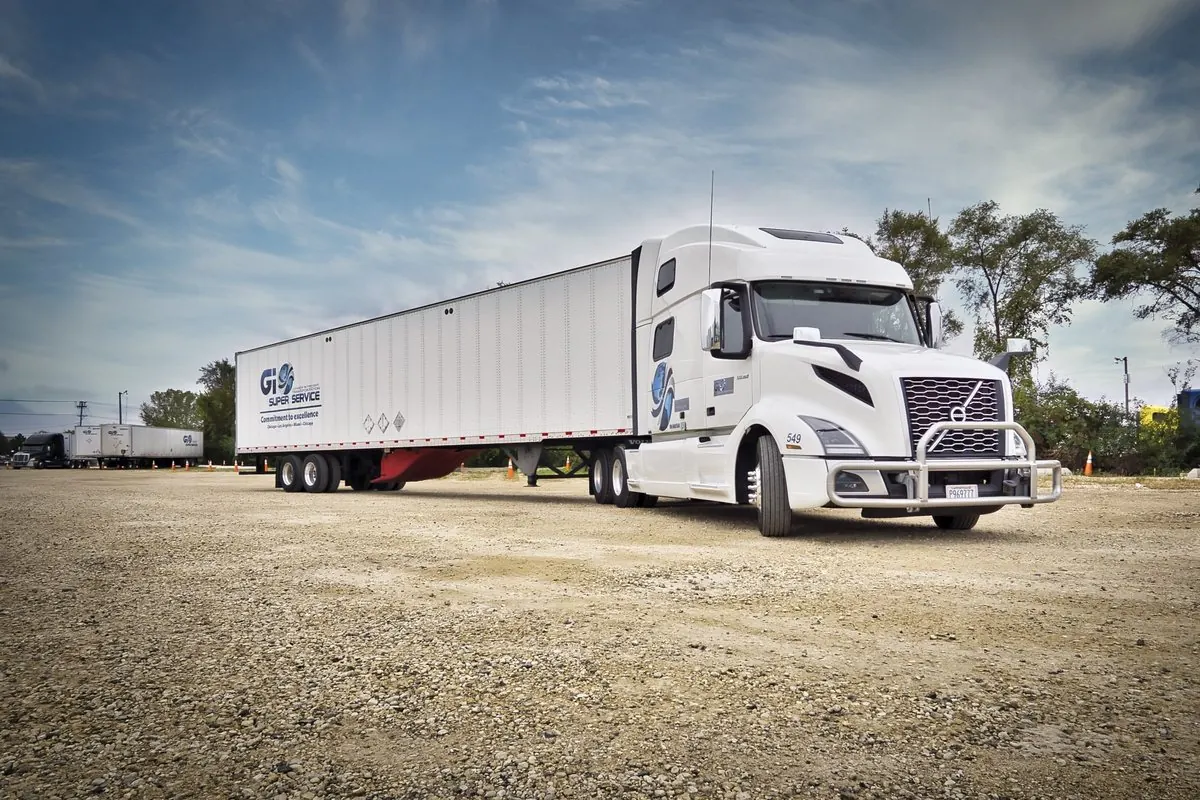
For Biocoiff, an organic hair-care brand, we tested 28 campaigns, cut 9 that did not earn their place, and scaled the best 4 by about 20% a month, with up to 8x ROAS on purchase campaigns. On the local side, the best campaigns for GI Super Service, a logistics company in Illinois, held $6–$9.36 per action while budgets scaled through peak season.
Full breakdown: Biocoiff case study.
A scaling checklist
- Seven-plus days of data, enough purchases, above break-even with a buffer.
- Meta purchases match store orders for the week.
- Budget raised about 20% at a time, with several days between steps.
- One change at a time, written down with the date.
- Testing budget running every week, new creative always in the pipeline.
- Horizontal options lined up: broad targeting, new angles, new country, second product.
- Prospecting and retargeting reported separately.
- Blended MER checked weekly, not just Ads Manager ROAS.
- Inventory, cash flow and fulfilment ready for the volume.
If you are still at the testing stage, start with our e-commerce testing playbook; scaling only works on top of a test that found a real winner. More on how we run Meta ads for online stores: e-commerce ads.
FAQ
How much should I increase my Facebook ad budget at a time?
We raise budgets on proven ad sets by about 20% at a time and wait several days between steps, as long as cost per purchase holds. Large jumps can count as a significant edit, send the ad set back into learning and make results unstable for a while.
Why does my ROAS drop when I scale Facebook ads?
More spend means Meta has to reach people who are less likely to buy and show ads more often to the same people. Some decline is normal. If cost per purchase rises with every step, hold the budget and scale sideways with new audiences, angles or products instead.
Should I duplicate a winning ad set to scale it?
Duplicating into a new audience, country or campaign can work as horizontal scaling. Duplicating into the same audience usually makes the copies compete with each other and split the data. We prefer raising the budget gradually or testing the proven ads against a broader audience.
Found a winning ad and not sure how far to push it? Book 30 minutes with Nick. You leave with a concrete 7-day ad test, whether you hire us or not.
Book a free call →Keep reading
- All e-commerce guides →
- How we run e-commerce ads →
- TikTok ads for small e-commerce brands: a starter playbook
- Hiring an ads agency vs running ads yourself
- Facebook ads for food and snack brands
- Case studies with real numbers
- We also run real estate ads →
- We also run local business ads →
More e-commerce guides
- Facebook ads for e-commerce in 2026: the testing playbook
- Creative fatigue: when to refresh your Meta ads
- Meta pixel + Conversions API: why ROAS lies without it
- Launching a Canadian brand in the US with paid ads
- Break-even ROAS: the number to know before you spend
- Meta ads for beauty and hair-care brands
- Meta Advantage+ sales campaigns: when to use them and when not
- How big should your first ad test budget be?