










Logistics owners who call us usually want "more leads", but a trucking or logistics company actually has two separate advertising jobs. One is winning freight customers: shippers, manufacturers, e-commerce brands and distributors who need loads moved or goods stored. The other is hiring drivers. These audiences search differently, respond to different ads and follow different platform rules. Put them in one campaign and the results get muddled. This guide covers how we split them, which channel fits each, how to set up forms and tracking, and the mistakes that waste the most money. It applies to carriers, freight brokers, 3PLs, courier and last-mile companies in the US and Canada, whether you hire help or run the ads yourself.
Two audiences, two campaigns
Before you spend anything, decide which problem the money is for this month. Here is how the two jobs compare:
| Freight customers | Drivers | |
|---|---|---|
| Who | Shipping managers, business owners, procurement | CDL drivers, owner-operators, warehouse staff |
| Best starting channel | Google Search | Facebook and Instagram |
| What they want to see | Lanes, equipment, reliability, a fast quote | Pay, home time, equipment, route type |
| Result to measure | Qualified quote requests, then booked loads | Qualified applicants, then hires |
| Platform rules | Standard B2B advertising | Employment ad restrictions on Meta and Google |
Each goal gets its own campaign, budget, landing page or form, and report. When a single dashboard number mixes driver applications with quote requests, you cannot tell which side is working.
Winning freight customers with Google Search
A shipping manager who needs a carrier usually searches for one. That makes Google Search the most direct channel for freight customers: you pay to show up at the moment someone types what you sell.
Build keywords around service plus place. Generic terms like "trucking company" are expensive and full of job seekers. Better searches combine what you haul with where: "flatbed trucking Indianapolis", "LTL carrier Chicago to Dallas", "refrigerated freight Midwest", "3PL warehouse New Jersey", "drayage Port of Savannah". Make a list of your real lanes, equipment types and service areas, and turn each into a small group of keywords with its own ad text.
Add negative keywords from day one. Logistics search traffic attracts a lot of people you do not want to pay for. The usual offenders:
- Job seekers: jobs, hiring, CDL, driver, salary, pay, career, school, training.
- Package tracking: tracking, track my package, where is my, delivery status, and the names of big parcel carriers.
- Wrong service: moving, movers, household, car shipping, if you do not offer them.
- Free information: what is, definition, rates per mile (unless you want rate shoppers).
Check the search terms report every few days during the first weeks and keep adding to this list. In our experience it is the single biggest source of wasted spend in logistics accounts.
Send clicks to a quote page, not the home page. The page should repeat the service and area from the ad, show the equipment and lanes you cover, and offer a short quote form: pickup and delivery locations, freight type, approximate weight or pallet count, how often they ship, and a phone number. Add a click-to-call button for people who prefer to talk. Proof helps: years in business, your authority or carrier number if relevant, the industries you serve, real truck photos instead of stock.
Ask about shipping frequency. One-off shippers and recurring accounts are worth very different amounts. A dropdown such as "one-time / weekly / several loads a week" lets your sales team prioritise and lets you see later which keywords bring recurring business.
Where Meta fits for freight customers
Facebook and Instagram are not where most shipping managers look for a carrier, so we do not lead with Meta for freight sales. It still has three useful roles:
- Retargeting people who visited your quote page or service pages but did not submit. A reminder with a clear offer ("quote in 2 hours") brings back some of them.
- Small business shippers. E-commerce brands, food producers and local manufacturers who need fulfillment, pallet shipping or regular local delivery are often owners who use Facebook every day. Ads that speak to their problem ("tired of chasing your freight broker?") can work here.
- Local delivery and courier services that sell to restaurants, retailers or clinics in one metro area.
If you use Meta lead forms for shippers, add two or three qualifying questions (lane, freight type, frequency). Without them, cheap form fills come from people who will never ship with you.
Recruiting drivers with Facebook and Instagram ads
Driver recruiting is where Meta usually does the most work for trucking companies. Many drivers are not actively searching job boards, but they scroll Facebook at truck stops and at home. A clear offer in front of them can produce applicants at a lower cost than many paid job boards, though that depends heavily on your market and pay.
Know the employment ad rules. In the US and Canada, Meta requires job ads to run under its Employment special ad category. In that category you cannot target by age or gender, ZIP code targeting is not available, location targeting has a minimum radius, and detailed targeting and lookalike options are limited. Google has similar restrictions on personalised targeting for employment ads in the US and Canada. The exact rules change, so check the current policy in Ads Manager before you build. In practice this means your creative and your form do the targeting work that audiences used to do.
Put the facts in the ad. Drivers compare offers quickly. The ads that get qualified applicants usually state:
- Pay range or cents per mile, and how it is calculated.
- Home time: daily, weekly, every two weeks.
- Route type: local, regional, OTR, dedicated lanes.
- Equipment: dry van, reefer, flatbed, tanker; truck age if it is a selling point.
- Required CDL class, experience and endorsements.
Use real photos or short phone videos of your trucks, yard and drivers (with their permission). A 20-second clip of a current driver explaining their home time often does better than a polished graphic, but test it rather than assume.
Use a short lead form with hard qualifiers. Ask for CDL class, years of experience, endorsements and the area they live in. That is enough to know if the person can be hired. Do not try to complete your full employment application inside the ad form; keep sensitive questions for your normal application and compliance process, and check Meta's lead form policies on which questions are allowed. Tell people what happens next ("a recruiter will call you today").
Call fast. Good drivers apply to several carriers in the same evening, and the first recruiter who calls has an advantage. Our guide on speed to lead covers the alert and follow-up system; it works the same for driver applicants as it does for customer leads.
Need freight customers or drivers from paid ads? Book 30 minutes with Nick. You leave with a concrete 7-day ad test, whether you hire us or not.
Book a free call →What we saw with an Illinois logistics company
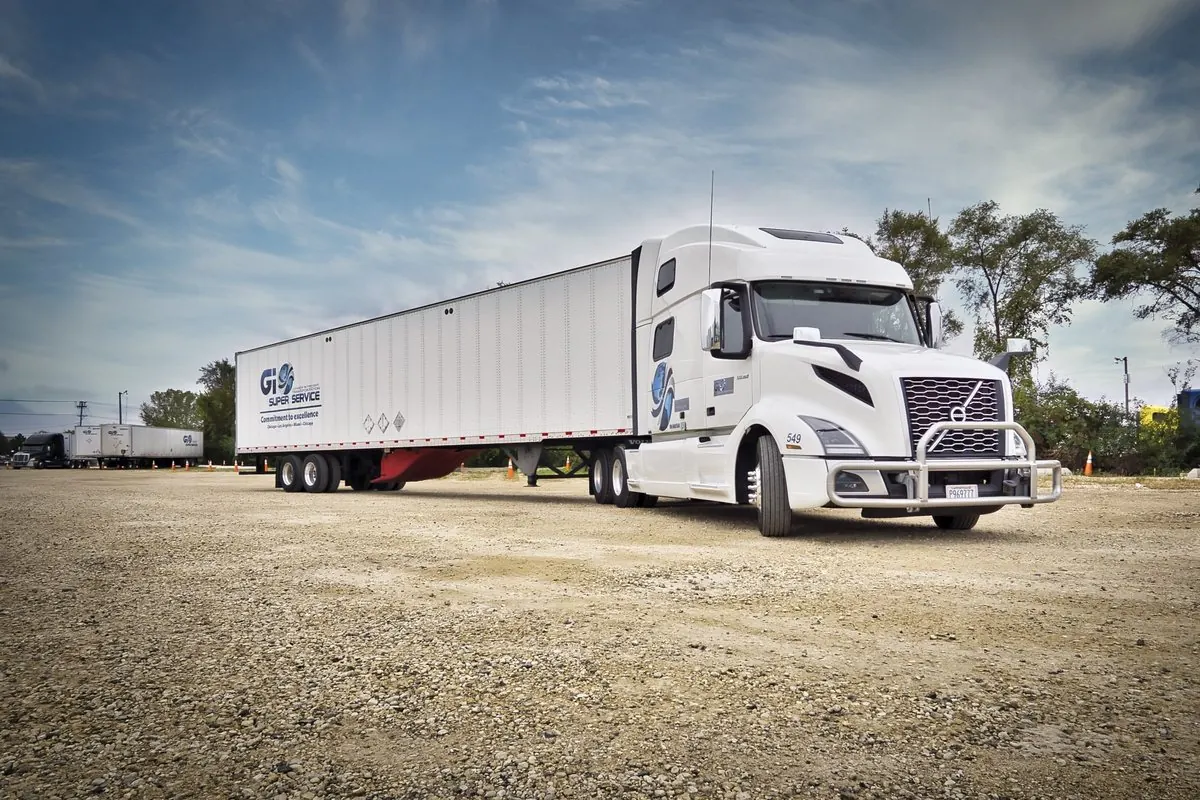
For GI Super Service, a logistics company in Illinois, our best campaigns delivered $6–$9.36 per action, and held that range while budgets scaled through peak season. The part we would repeat for any logistics client is how we got there: test several campaigns on a small budget, cut the ones that do not deliver, and only then add budget to the winners in steps. Logistics demand is seasonal, and the temptation in peak season is to double budgets overnight. Gradual increases on proven campaigns are what kept the cost per action stable.
The full story is in the GI Super Service case study.
Budget and timing
Start each goal with a 7-day test across two or three audiences or keyword groups and several creative angles. For most small and mid-size carriers that is a few hundred dollars of ad spend per goal, enough to see a real cost per quote request or applicant before you commit more. Keep the driver budget and the freight budget separate so one cannot eat the other.
Plan around your season. If you know your volume climbs before the holiday retail rush or during produce season, test in the quieter weeks before it, so you enter the busy period with campaigns that already work. Hiring ads in particular should start before you are short of drivers, not after.
Track what turns into revenue
Cost per lead is only the first number. For freight customers, track quote requests, quotes sent, first loads and repeat loads. For drivers, track applicants, qualified applicants, interviews, hires and drivers still with you after 90 days. A shared spreadsheet is enough to start; a CRM or applicant tracking system is better.
- Install conversion tracking on the quote form and phone clicks (Google tag, Meta pixel and, where you can, the Conversions API).
- Track calls. Many shippers phone instead of filling in a form. A call tracking number on the landing page shows which keywords produce calls.
- Mark each lead's outcome and, once you have enough volume, send those outcomes back to Google (offline conversion import) and Meta, so the platforms learn which clicks become customers. Setup requirements change, so follow the current guides.
Mistakes we see most often
- One campaign for drivers and shippers. Results and budgets get mixed and nobody can tell what works.
- No negative keywords, so the freight budget pays for job seekers and people tracking parcels.
- Hiding pay in driver ads. It saves nothing; it just means unqualified applicants and wasted recruiter calls.
- Boosting a hiring post instead of building a proper campaign with a form and tracking. Our guide on boosted posts vs Ads Manager explains the difference.
- Judging after three days or scaling budget in one jump during the busy season.
Logistics ads checklist
- Separate campaigns, budgets and reports for freight customers and drivers.
- Google Search keywords built from your real lanes, equipment and service areas.
- Negative keyword list for jobs, parcel tracking and services you do not offer.
- A quote page with a short form, click-to-call and real proof.
- Driver ads set up under Meta's Employment category, with pay, home time, route and equipment in the ad.
- Lead forms with CDL and experience qualifiers, and a recruiter who calls the same day.
- Conversion and call tracking, and outcomes recorded for every lead.
Our local business ads page shows how we run this process for logistics, solar, salons and other service companies.
FAQ
Do Facebook ads work for trucking companies?
They work best for driver recruiting, where many drivers are not on job boards but use Facebook daily. For freight customers, Google Search usually comes first, with Meta used for retargeting and small business shippers.
What are the rules for driver recruiting ads on Facebook?
In the US and Canada, job ads must run under Meta's Employment special ad category, which removes age, gender and ZIP code targeting and limits other targeting options. Rules change, so check the current policy in Ads Manager before launching.
How much should a logistics company spend to test ads?
We start with a 7-day test per goal, usually a few hundred dollars of ad spend, split across two or three audiences or keyword groups. Budget goes up in steps only for campaigns with a proven cost per qualified lead.
Need freight customers or drivers from paid ads? Book 30 minutes with Nick. You leave with a concrete 7-day ad test, whether you hire us or not.
Book a free call →Keep reading
- How we run local business ads →
- Speed to lead: why answering in 5 minutes beats a better ad
- Boosted posts vs Ads Manager campaigns: why boosting rarely books jobs
- Instagram ads for salons and spas that fill the calendar
- Case studies with real numbers
- We also run real estate ads →
- We also run e-commerce ads →