









“How much should we spend on ads?” is the first question almost every owner asks us, and the honest answer is not a number pulled from an industry chart. It is a number you can calculate from three things you already know: what a customer is worth to you, how many leads it takes to win one, and how much data an ad platform needs before it can tell a good ad from a bad one. Below is the method we use with local service businesses in the US and Canada, with worked examples, so you can set a budget for your own business this afternoon.
Why “percent of revenue” is only a starting point
You will often see a rule of thumb that small businesses should spend somewhere around 5–10% of revenue on marketing (the US Small Business Administration has long been quoted at roughly 7–8% for businesses with healthy margins). It is a fine sanity check for the whole marketing line, which also covers your website, signage, software and your own time. It is a poor way to set a paid ads budget, for three reasons:
- It ignores margin. A roofer making $5,000 gross profit per job and a dog groomer making $40 per visit cannot use the same percentage.
- It ignores capacity. If your crew is booked for six weeks, more ad spend just creates leads you cannot serve.
- It ignores the minimum test size. A budget that is “7% of revenue” can still be too small to produce a single useful result in a month.
So we work bottom-up: from the value of one customer to the maximum you can pay for a lead, and from there to a monthly budget that is big enough to learn something.
Step 1: what is one new customer worth?
Use gross profit, not revenue. If a job brings in $1,200 and materials plus labour cost $700, the job is worth $500 to you. Then decide whether you count only the first job or repeat business too:
- One-off services (a roof, a solar install, a move): count the first job only.
- Repeat services (cleaning, lawn care, salons, auto repair): count what an average customer spends in the first 6–12 months. Use your own records, and be conservative.
Next, decide what share of that profit you are willing to hand to advertising to win the customer. For a new channel, 20–40% of first-year gross profit is a common, survivable range. Going higher can make sense if referrals and reviews follow; going lower is fine if you are cautious. This gives you your maximum cost per customer.
Step 2: turn that into a maximum cost per lead
Not every lead becomes a customer. Look at the last 20–50 enquiries you got from any source and count how many you reached, how many got a quote or appointment, and how many paid. Then:
| Line | Example: house cleaning | Example: kitchen remodel |
|---|---|---|
| Gross profit per customer (12 months) | $600 | $9,000 |
| Share you will spend to acquire | 30% → $180 | 20% → $1,800 |
| Leads that become customers | 1 in 4 | 1 in 12 |
| Maximum cost per lead | $180 ÷ 4 = $45 | $1,800 ÷ 12 = $150 |
These are illustrative numbers, not benchmarks. Plug in yours. The point is that you now have a ceiling: any campaign that brings qualified leads below it is worth scaling, and anything above it needs fixing or stopping. Notice also that improving your close rate from 1 in 4 to 1 in 3 raises the price you can pay per lead from $45 to $60. Better follow-up often buys you more room than a cheaper ad. (We wrote more about that in our guide on lead generation for solar companies, where the same math decides everything.)
Step 3: the minimum budget that can teach you something
This is the step most owners skip, and it is why so many say “we tried Facebook ads, they don’t work”. They spent $200 over a month split across five ads, got four leads, and had no way to know which ad, audience or offer was responsible.
Ad platforms optimize on results. Meta’s delivery system works best when each ad set gets a steady flow of the event it is optimizing for; Meta’s own guidance has long been around 50 results per ad set per week to leave the “learning phase”. Most small businesses will not hit that, and that is fine, but it tells you why very small budgets spread thin produce noise.
A practical rule we use: plan for at least 10–20 leads per thing you want to compare, within one or two weeks. If your expected cost per lead is $30 and you want to compare 3 creative angles, that is roughly 3 × 15 × $30 ≈ $1,350 for a meaningful first test. If that is more than you can risk, compare fewer things at once (2 angles, 1 audience) rather than spreading the same money thinner.
| Expected cost per lead | Testing 2 angles | Testing 3 angles |
|---|---|---|
| $10 | ~$300 | ~$450 |
| $30 | ~$900 | ~$1,350 |
| $60 | ~$1,800 | ~$2,700 |
(Rough figures at about 15 leads per angle. Your first week will tell you your real cost per lead; adjust from there.)
Not sure what budget your business needs to get a clear answer? Book 30 minutes with Nick. You leave with a concrete 7-day ad test, whether you hire us or not.
Book a free call →Step 4: check the budget against your capacity
Before you raise spend, ask how many new customers you can actually serve per month. If the answer is 8, and you close 1 in 4 leads, you need about 32 leads a month. At a $40 cost per lead that is about $1,300 a month in ads. Spending $5,000 will not give you more revenue; it will give you a waiting list, slower response times and worse reviews.
Capacity also includes answering the phone. A lead that waits a day to be called is worth a fraction of one called in five minutes. If nobody can respond quickly during the day, fix that before you add budget.
How to split the budget between Google and Meta
Most local businesses end up using both, but not on day one. A simple way to decide where the first dollars go:
- People already search for what you sell (emergency plumber, towing, “AC repair near me”): start with Google Search. Intent is high and clicks cost more; a tight keyword list in your service area matters more than budget size.
- People do not search until they see it (a new salon service, solar, a seasonal offer, home upgrades): start with Meta (Facebook and Instagram). Leads are usually cheaper and need more qualifying.
- Both are true: start with the channel you can test properly on your budget, prove one offer, then add the second channel with 20–30% of spend.
Whatever you pick, use the full campaign tools, not the “Boost” button. If you are starting on Meta, our step-by-step Facebook ads setup for local businesses covers the account basics.
Three worked examples
A salon in one city. Average client worth $350 in gross profit over a year, owner willing to spend 30% ($105), closes 1 in 3 enquiries → maximum cost per lead $35. Expected lead cost on Instagram with a strong first-visit offer is often well below that. A first test of 2 offers at ~15 leads each needs only a few hundred dollars. For a beauty business we have seen leads at $0.16 on Instagram with offer-led creatives and a short booking form; that is not typical for every market, but it shows how much the offer drives cost.
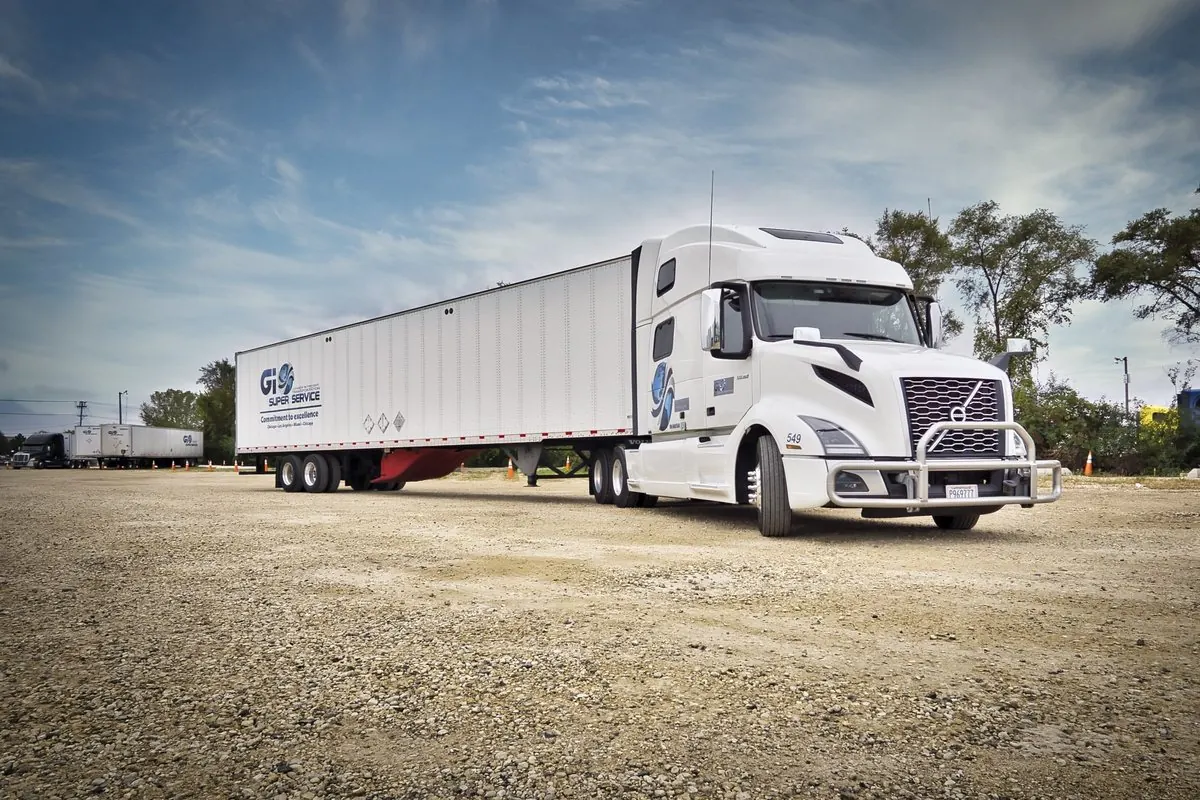
A trucking or logistics company. Each new shipper or driver is worth a lot, and the “action” might be an application or a quote request rather than a sale. For GI Super Service, a logistics company in Illinois, the best campaigns delivered $6–$9.36 per action and held that range while budgets scaled through peak season. Budgets rose because the cost per action stayed under the ceiling, not because of a revenue percentage (read the GI Super Service case).
A home renovation contractor. High ticket, low close rate, long decision. Maximum cost per lead might be $150 or more, so the minimum test budget is higher too, often $2,000–$3,000 for the first two weeks. If that is out of reach, run one strong offer to one audience, not three of each.
When to raise, hold or cut
- Raise when cost per qualified lead (or per booked job) has been under your ceiling for at least a week and you have capacity. Increase in steps of about 20% every few days rather than doubling overnight, so delivery does not reset.
- Hold when results are near the ceiling. Work on the offer, the form and follow-up speed first.
- Cut any ad or audience that has spent two to three times your maximum cost per lead without producing a qualified one.
- Stop and rethink if no variant gets under the ceiling after a properly sized test. Usually it is the offer or the landing page, not the budget.
Budget mistakes we see most often
- Spreading a small budget across many campaigns, audiences and ads at once.
- Judging after two or three days, before there is enough data.
- Counting all form fills as leads, including people outside the service area or who never answer.
- Raising spend on a campaign that looks cheap in Ads Manager but does not produce booked jobs.
- Turning ads off in the busy season and on again when it is quiet, so every restart begins from zero.
Your one-page budget sheet
- Gross profit per customer (first job or first 12 months).
- Share of that you will spend to acquire a customer.
- Your lead-to-customer rate from real recent enquiries.
- Maximum cost per lead = the two lines above combined.
- Number of things you will compare in the first test (2–3 at most).
- First test budget ≈ things compared × 15 leads × expected cost per lead.
- Monthly capacity in new customers, and the lead volume that matches it.
A good ads budget is not the biggest one you can afford. It is the smallest one that gives a clear answer, followed by more money only where the numbers say yes. That is the “test small, then scale what works” approach we use for every local client; more on how we run it for service businesses is on our local business ads page.
FAQ
How much should a small business spend on ads per month?
Work it out from your own numbers: the profit per customer, the share you will spend to win one, and your lead-to-customer rate give a maximum cost per lead. Then size the budget to get 10–20 leads per thing you test and to match how many customers you can serve.
What is the minimum budget for Facebook ads for a local business?
Meta lets you start with very small daily budgets, but a useful first test usually needs enough spend for about 15 leads per angle you compare. At $30 per lead and 2 angles that is roughly $900 over one to two weeks.
Should a small business spend a percentage of revenue on ads?
A percentage of revenue is a reasonable sanity check for total marketing, but a poor way to set a paid ads budget. It ignores margin, capacity and the minimum spend a test needs to give a clear answer.
Not sure what budget your business needs to get a clear answer? Book 30 minutes with Nick. You leave with a concrete 7-day ad test, whether you hire us or not.
Book a free call →