


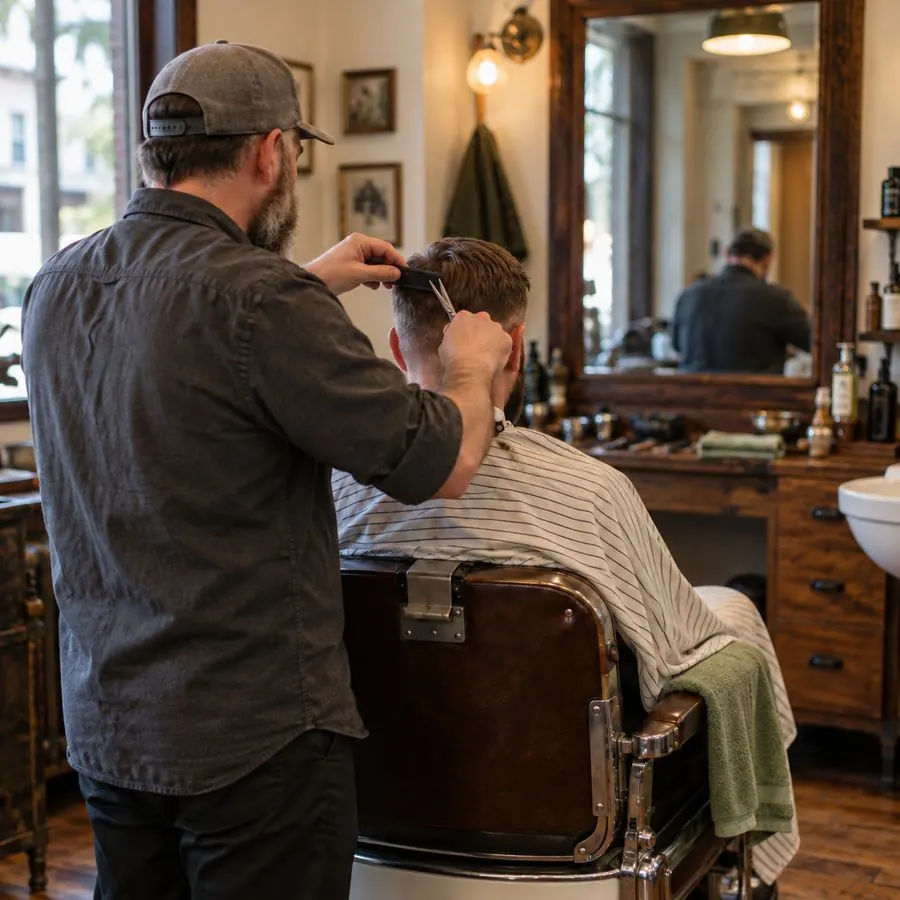

Most salons and spas that try Instagram ads make the same move: they boost a nice photo of a recent balayage or a facial room, get some likes, and see no change in the booking calendar. The problem is rarely the platform. Instagram is where people in your city already look at hair, nails, brows and skin. The problem is that a pretty post is not an offer, a like is not a booking, and nobody is following up fast enough. Below is how we set up Instagram (and Facebook) ads for beauty businesses in the US and Canada so the result shows up in the appointment book, not just in the reach number.
Why Instagram works for salons, and when it does not
Beauty is a visual purchase made by people who live within a short drive of you. That makes Meta's ad system a good fit: you can show a transformation to people in a few miles around the salon, and they can tap through to book in under a minute. It works best for:
- New-client offers: first cut and style, first facial, a lash fill for new clients, a brow package.
- Services with a visible result: colour, extensions, lashes, nails, skin treatments.
- Filling known gaps: slow weekdays, a new stylist's empty column, a newly added service.
It works poorly when the real constraint is somewhere else. If your calendar is already full on weekends and your team cannot take more weekday clients, ads will only create frustration. If clients cannot book online and nobody answers the phone during service hours, a lot of the money will be wasted. Fix those first; the ads will be cheaper afterwards.
Start with the offer, not the photo
The single biggest driver of cost per lead in beauty is the offer. For a beauty business we have seen leads at $0.16 on Instagram with offer-led creatives and a short booking form. That is not typical for every market or service, but it shows how far a clear offer moves the number. A good first-visit offer has four parts:
- A specific service, not “20% off everything”. “Express facial + skin consultation” beats “spa specials”.
- A clear price or saving that you can afford on a first visit, knowing a good client comes back.
- A reason to act now: limited weekday slots, the first 20 bookings, this month only. Keep it true.
- A next step that is easy: book online, or leave a name and number for a call back.
Work out what you can spend before you pick the discount. If an average regular client is worth $350 in gross profit over a year and one in three enquiries books and returns, you can afford roughly $35 per lead at a 30% acquisition share. Our guide on how much a small business should spend on ads walks through that math step by step.
The campaign setup we use
Use Ads Manager, not the Boost button in the Instagram app. Boosting optimises for engagement by default and gives you few controls over who sees the ad and what counts as success. A simple structure that works for one location:
| Setting | What we choose | Why |
|---|---|---|
| Objective | Leads (instant form) or Sales/Leads to your booking page | Meta then looks for people likely to fill a form or book, not to like |
| Location | Radius around the salon, usually 5–15 miles; tighter in dense cities | People rarely drive far for a haircut; adjust to your real client map |
| Audience | Broad within the radius, age range only if a service truly fits | Meta's delivery usually finds buyers better than narrow interests |
| Placements | Advantage+ placements, with vertical 9:16 creative for Reels and Stories | Most beauty engagement on Instagram happens in Reels and Stories |
| Structure | 1 campaign, 1–2 ad sets, 2–3 creative angles per ad set | Small budgets need concentration to learn anything |
Meta's interface and naming change often, so treat the labels as approximate. The principle does not change: optimise for the action you want, keep the location realistic, and do not split a small budget across many audiences.
Lead form or booking link?
This choice matters more than most owners expect.
- Booking link (to your online booking page in Vagaro, Fresha, Square, Boulevard, Mindbody or similar): best when your booking flow is fast on a phone and shows real availability. Fewer leads, but each one is an actual appointment. Make sure you can track bookings back to the ad; many booking tools support a Meta pixel or UTM tags, but check what yours offers.
- Instant form (Meta's in-app form): cheaper leads because the person never leaves Instagram. The catch is intent. Some people tap through without thinking. Keep the form short, but add one or two questions that make people pause, such as “Which service are you interested in?” and “Which days suit you best?”, and consider Meta's higher-intent form option that adds a review step.
If you use a form, the lead is only half the job. Someone has to call or text within minutes, during the hours people actually fill the form, which is often evenings. A text that says “Hi Sarah, it's Mia from Glow Studio, you asked about the first facial. I have Tuesday 4pm or Thursday 11am, which works?” books far more than a call two days later. The same principle applies in every lead business; our guide on Facebook ads for local businesses covers follow-up in more detail.
Want a first-visit campaign for your salon or spa tested in the next 7 days? Book 30 minutes with Nick. You leave with a concrete 7-day ad test, whether you hire us or not.
Book a free call →Creative angles that fill calendars
Test two or three different angles, not ten versions of the same photo. Angles that tend to work for salons and spas:
- The transformation: a short Reel of a colour, cut or lash set going from start to finish. Real clients (with written consent), real lighting, no heavy filters. Hairdressers can usually get away with clear before-and-after; for skin, body and anything that looks like a health claim, Meta's policies are stricter, so check the current rules before you run it.
- The person behind the chair: the stylist or therapist talking to camera for 15–20 seconds about who they love working with and what a first visit includes. This lowers the fear of trying someone new.
- The offer, plainly: a clean graphic or video with the service, price, and “new clients only, weekdays”. Not glamorous, often the cheapest per lead.
- The experience: the head massage at the basin, the quiet treatment room, the tea. Works well for spas and higher-priced services.
- Social proof: a real Google review on screen with the client's first name, or a short clip of a regular explaining why they come back.
Two policy points worth knowing. First, Meta does not allow ads that assert or imply personal attributes, so avoid copy like “Tired of your thinning hair?” and write “Volume treatment for fine hair” instead. Second, medical-aesthetic services such as injectables have extra restrictions and age targeting rules in many regions; if you offer them, keep those ads separate and read the current policy first.
Shoot vertical, put the hook in the first two seconds, add captions because many people watch without sound, and put the offer in text on screen, not only in the caption.
Budget and how long to test
For one location, we usually plan a first test of one to two weeks with enough budget to get roughly 15 leads per angle. If you expect about $10 per lead and test two angles, that is around $300; at $25 per lead and three angles, closer to $1,100. Your first few days will show your real cost per lead, and you adjust from there.
Judge by booked and attended appointments, not by cost per lead alone. An angle with $4 leads that never show up is worse than one with $12 leads that book. Keep a simple sheet: date, ad name, lead name, contacted (yes/no), booked, showed, spent. After two weeks the winner is usually obvious.
When an angle stays under your target cost per booked client for a week, raise its budget in steps of about 20% every few days. Doubling overnight often makes results jump around while delivery readjusts.
Turn first visits into regulars
Paid ads only pay off for a salon if new clients come back. The ad's job is the first visit; your team's job is the second. A few things that make a big difference:
- Pre-book the next appointment at checkout, especially for colour, lashes and nails with natural refill cycles.
- Follow up within 48 hours with a thank-you and a request for a Google review. Reviews also make future ads more convincing.
- Retarget past visitors with a separate, small campaign for a second-visit offer or a new service. If you upload a customer list, make sure you have the right consent under the privacy rules that apply to you.
- Track repeat rate by source. If ad clients return less than referral clients, look at the offer: very deep discounts tend to attract bargain hunters.
Mistakes we see most often
- Boosting portfolio posts and judging success by likes.
- A radius so wide that half the leads live 40 minutes away.
- Instant forms with no follow-up until the next day.
- Running the same single creative for months until costs climb.
- Discounts so deep that first visits lose money and do not come back.
- No way to tell which bookings came from ads, so the decision to keep spending is a guess.
Your launch checklist
- One specific first-visit offer you can afford, with a real limit.
- A target cost per booked client based on your client value and close rate.
- Booking link tested on a phone, or an instant form with 1–2 qualifying questions.
- A named person who replies to leads within minutes, including evenings.
- Two or three vertical creatives with different angles and captions on screen.
- A tracking sheet from lead to attended appointment.
- A plan for the second visit: pre-booking, review request, retargeting.
That is the same “test small, then scale what works” method we run for salons, spas and other service businesses. You can see how we approach beauty and other local services on our local business ads page.
FAQ
How much do Instagram ads cost for a salon?
It depends on your city, service and offer. A useful first test for one location usually needs enough budget for about 15 leads per creative angle, which is often a few hundred to about a thousand dollars over one to two weeks.
Should a salon use an Instagram lead form or a booking link?
A booking link gives fewer but firmer appointments if your online booking is fast on a phone. Instant forms give cheaper leads but need qualifying questions and a reply within minutes to turn into bookings.
Is boosting a post enough for salon advertising?
Usually not. Boosting optimises for engagement, so you get likes rather than bookings. An Ads Manager campaign optimised for leads or bookings, with a clear first-visit offer, gives the platform the right goal.
Want a first-visit campaign for your salon or spa tested in the next 7 days? Book 30 minutes with Nick. You leave with a concrete 7-day ad test, whether you hire us or not.
Book a free call →