



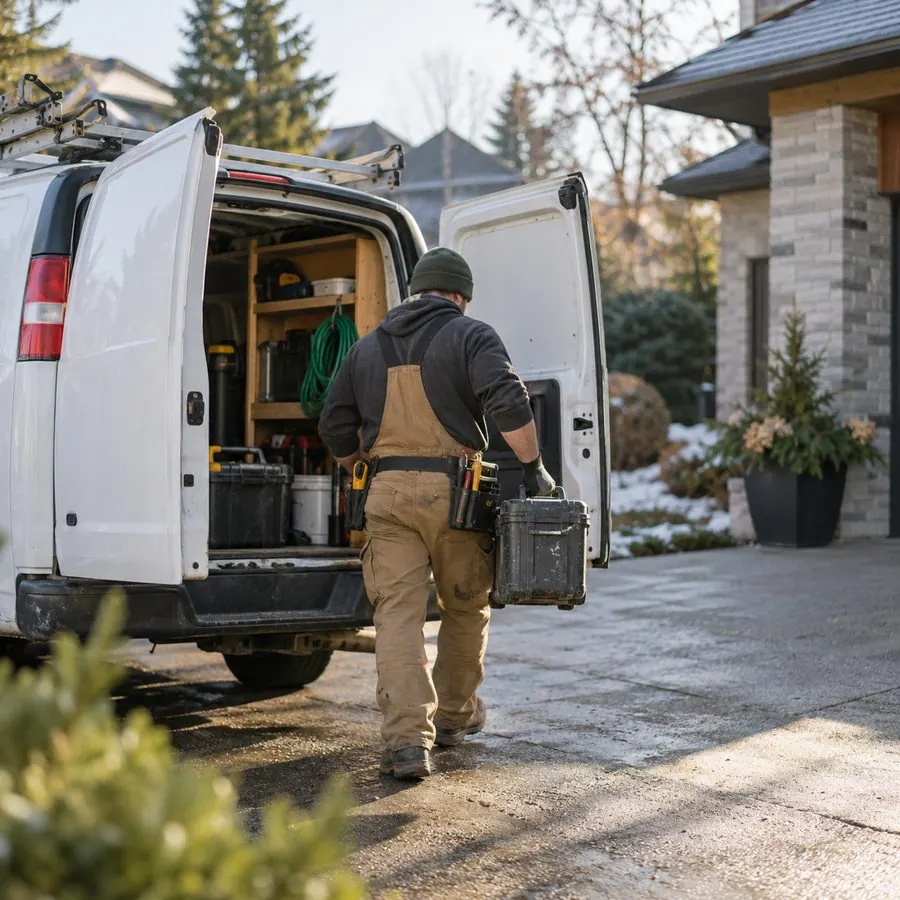






HVAC companies have a problem most local businesses do not: demand that swings hard with the weather. On the first hot week of summer or the first cold snap of winter, the phone rings off the hook. In spring and fall, technicians sit idle. Ads can help on both ends, but only if you stop treating “HVAC ads” as one campaign. An emergency AC repair, a full system replacement and a maintenance plan are three different customers with three different searches, budgets and decision times. This guide shows how we structure HVAC advertising across Google and Meta.
Three jobs, three campaigns
| Job | Customer mindset | Best channel | What to measure |
|---|---|---|---|
| Emergency repair | “My AC died, I need someone today” | Google Search, Local Services Ads, call ads | Cost per booked call |
| System replacement | “My system is old, what are my options?” Weeks of research | Google Search plus Facebook and Instagram | Cost per in-home estimate, close rate |
| Maintenance plans and tune-ups | Not urgent, price-aware | Facebook and Instagram, retargeting past customers | Cost per booked tune-up, plan sign-ups |
Mixing these in one campaign is the most common mistake we see. Repair searches swallow the budget in peak weeks, and nobody can tell what replacement leads actually cost.
Google: catch people when it breaks
When someone types “AC repair near me” on a 95-degree day, they are ready to book now. That is Google’s job.
- Local Services Ads appear at the top of many HVAC searches with a “Google Guaranteed” or similar badge (the badge program and availability vary by category and region). You typically pay per lead rather than per click, and you can dispute leads that do not fit. For many HVAC companies they are the cheapest source of emergency calls. Our comparison of Local Services Ads vs Google Search ads explains how they differ.
- Search campaigns give you control over keywords, ad copy and landing pages. Separate ad groups for repair, installation and maintenance terms, with ad copy that matches: “Same-day AC repair” for repairs, “Free replacement estimate” for installs.
- Call-focused setup. Many repair customers want to call, not fill in a form. Use call assets and make sure calls during ad hours get answered by a person.
- Negative keywords from day one: jobs, careers, training, school, certification, DIY, parts, manual. HVAC terms attract a lot of job seekers and DIYers.
- Schedule by capacity. If you cannot run a truck after 8 p.m., do not pay for “emergency” clicks at midnight unless someone will call back first thing.
Facebook and Instagram: fill the slow weeks
Meta does not catch emergency demand, because people with a broken furnace search rather than scroll. What Meta does well is create demand when the phone is quiet:
- Pre-season tune-up offers. “Get your AC checked before the first heat wave” in late spring, the same for furnaces in early fall. A clear price or a limited number of slots works well.
- Replacement education. A short video of a technician explaining the signs a system is near the end of its life, followed by an offer for a free in-home estimate.
- Financing angles, if you offer financing: “New system from $X/month” can work, but check that the wording meets your lender’s and local advertising rules.
- Rebates and incentives. Utility rebates and government programs for heat pumps and efficient systems can be a strong hook. They change often and differ by state, province and utility, so verify the current program before you put it in an ad.
Keep the radius tight to the area your trucks actually serve. A wider audience gets cheaper clicks and more leads you cannot service. Our Facebook ads setup guide for local businesses covers the campaign setup step by step.
Want a steadier HVAC calendar through every season? Book 30 minutes with Nick. You leave with a concrete 7-day ad test, whether you hire us or not.
Book a free call →Plan the budget around the seasons
A flat monthly budget wastes money in peak weeks (you are already full) and underspends in slow weeks (when ads would fill gaps). A simple seasonal plan:
- Peak heat and peak cold: keep Google repair campaigns running at whatever volume you can actually service. Pause or cut Meta tune-up offers; you do not need them.
- Shoulder seasons: shift budget to Meta tune-up and maintenance plan offers, and to replacement campaigns. This is when homeowners have time to think about a new system.
- Before each season: run a short burst of “get ready” tune-up ads to existing customers and lookalike-style audiences of past customers, where the platform allows it.
Review weekly in peak seasons. HVAC demand can change in days with the forecast.
Replacement leads need a different follow-up
A replacement job can be worth many times a repair, and the customer usually gets two or three quotes. Speed and clarity win:
- Call within minutes and book the in-home estimate for the next day or two. Our guide on speed to lead shows a simple alert and call system.
- Send a confirmation text with the technician’s name and photo.
- Leave a written quote with options (good, better, best) and follow up within 48 hours.
- Track estimates to closed jobs. A campaign with a higher cost per lead can be far more profitable if those leads close.
Maintenance plans: the quiet profit engine
Plan members provide predictable revenue, fill slow weeks and become your first call when something breaks. Ads can grow them in two ways: retargeting past repair customers with a plan offer after the job, and running tune-up offers that end with a plan pitch at the visit. Measure plan sign-ups, not just tune-ups booked.
Track calls, not just forms
HVAC leads often arrive by phone. If you only count form fills, Google repair campaigns will look weak. Use call tracking numbers on ads and your website, set a minimum call length that counts as a lead, and mark which calls turned into jobs. Without that, you will cut the campaign that actually fills your trucks.
What a first test looks like
For local services we start with a 7-day test across 2–3 audiences or keyword groups and several offers, on a few hundred dollars of ad spend, then move budget only to what produced booked jobs. In other local categories this approach has produced results like $6–$9.36 per action on the best campaigns for an Illinois logistics company, held while budgets scaled through peak season. HVAC numbers will differ by market, but the method is the same: test small, read the numbers, then scale.
Reviews and your Google Business Profile
In HVAC, people often pick between three companies on a search page in under a minute, and star ratings decide a lot of that choice. Reviews also matter for Local Services Ads, where your rating and number of reviews are shown next to the ad and can affect how often it appears. A simple habit pays off: ask every happy customer for a Google review the same day the job is done, by text with a direct link. Reply to every review, including the bad ones, calmly and specifically. Keep your Google Business Profile complete: service areas, hours (including emergency hours if you offer them), photos of your team and trucks, and the services you actually provide. Strong reviews make every ad dollar work harder, on Google and on Meta, where you can turn the best reviews into simple testimonial creatives.
HVAC ads checklist
- Separate campaigns for repair, replacement and maintenance.
- Google Search and Local Services Ads cover emergency demand.
- Meta fills shoulder seasons with tune-up and replacement offers.
- Negative keywords exclude jobs, training and DIY searches.
- Calls are tracked and answered by a person during ad hours.
- Budget shifts with the seasons, reviewed weekly in peaks.
See how we run campaigns for service businesses on our local business ads page.
FAQ
What is the best advertising for HVAC companies?
For emergency repairs, Google Search and Local Services Ads work best because people search when their system breaks. For tune-ups, maintenance plans and replacement estimates, Facebook and Instagram ads fill slow seasons at a lower cost per lead. Most HVAC companies need both.
How much should an HVAC company spend on ads?
Start with a 7-day test of a few hundred dollars across repair, replacement and maintenance offers, then scale what books jobs. Budget should follow the seasons: more on Google during peaks, more on Meta in shoulder months.
Do Facebook ads work for HVAC?
Yes, for non-urgent jobs. People with a broken AC search on Google, but Facebook and Instagram are effective for pre-season tune-ups, maintenance plans and system replacement estimates when the offer is clear and the radius is tight.
Want a steadier HVAC calendar through every season? Book 30 minutes with Nick. You leave with a concrete 7-day ad test, whether you hire us or not.
Book a free call →Keep reading
- All local business guides →
- How we run local business ads →
- How we run home services ads →
- Facebook & Instagram ads: our service →
- Google Ads and Facebook ads for contractors: what books estimates
- Facebook and Google ads for roofing companies
- Retargeting ads for small businesses: a practical setup
- Hire an agency or run ads yourself?
- Case studies with real numbers
- We also run real estate ads →
- We also run e-commerce ads →
More local business guides
- Facebook ads for home service businesses: what actually books jobs
- Google Maps ads: how to show up in local search
- Google Ads for solar companies: keywords, budgets and lead quality
- Facebook lead forms vs landing pages: which brings better leads
- Ads for car rental businesses: how to get more direct bookings
- Trucking company ads: Google Ads and Facebook ads for logistics companies
- Speed to lead: why answering in 5 minutes beats a better ad
- Facebook boost vs Ads Manager: why boosted posts rarely book jobs
- Instagram ads for salons and spas that fill the calendar